- March 11, 2026
- By: Admin@@SMiles0fviEr@
- No Comments
How to Fix a Chipped Tooth: Dentist-Recommended Solutions
“It often happens when you least expect it.”
You chew down on something crunchy — perhaps popcorn, ice or a nut — and then something isn’t quite right. Your tongue grazes your tooth, and you feel a jagged edge that wasn’t there previously.
If you’re asking yourself how to fix a chipped tooth, knowing the cause and treatment options available for you can help keep your smile safe from further damage.
A chipped tooth? For most of us, the initial emotion is concern:
- Is this serious?
- Will my tooth get worse?
- How do I fix a chipped tooth?
The good news is that chipped teeth are extremely common, and dentists fix them every day. In many cases, it is a quick, painless treatment. The trick is to know what precipitated the chip and take all the right actions moving forward.
What Causes a Chipped Tooth?
While teeth are powerful, they are not unbreakable. With time, daily habits or even extreme accidents can wear down enamel and cause small flakes to break off.
Common causes include:
- Chewing down on hard food items like ice, nuts or hard candy
- Sports accidents or other accidental falls
- Nighttime teeth grinding (bruxism)
- Erosion of the enamel due to tooth decay
- Old dental fillings that compromise tooth structure
- Sudden impact to the mouth
A chip is nothing more than a cosmetic issue in some cases. At other times, it can indicate more extensive structural damage inside the tooth.
If you notice any pain while chewing or sensitivity to temperature, it’s worth looking for cracked tooth symptoms because cracks and chips can happen at the same time.
What to Look Out for if Your Cracked Tooth Requires Treatment
Not every broken tooth is painful, but some symptoms are a sign that the tooth needs to be checked out by a dentist.
Watch for these signs:
- Green or rough edges that rub against your tongue
- Sensitivity to hot or cold foods
- Pain when biting down
- Tooth with clearly missing chunks
- Pain or discomfort near the tooth
Infections like this can also result from a chip, even if minor, that allows bacteria to gain access.
What to Do Right After You Chip a Tooth
So if you’ve only just chipped a tooth, don’t panic. There are a few easy things you can do to protect your tooth temporarily until you can see a dentist.
While some individuals may do an online search to fix a cracked tooth at home, they must understand that home remedies can usually only relieve the symptoms and cannot fix damage done to teeth permanently.
Immediate care tips:
- Rinse your mouth with warm salt water
- If possible, save any pieces of the broken tooth
- Not chewing on the affected side
- Eat soft foods until the tooth has been fixed
- Cover sharp edges with dental wax if necessary
These actions can alleviate irritation and provide temporary protection to the tooth.
But they don’t provide a permanent solution to the chip.
How to Fix a Chipped Tooth, According to Dentists
Dentists recommend appropriate treatment depending on the size of the break and whether deeper layers of the tooth are involved.
Here are some of the most common repair options.
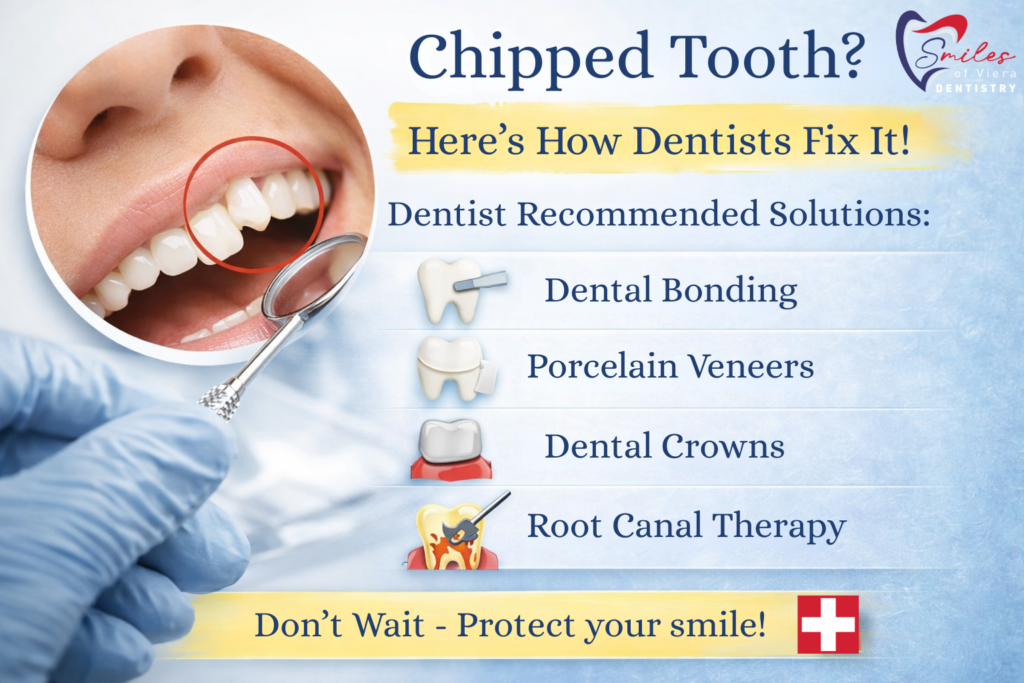
| Treatment | Best For | How It Works |
| Dental Bonding | Small chips | Tooth-colored resin builds up the chipped zone |
| Porcelain Veneers | Front teeth damage | Restores original shape and appearance by a thin porcelain shell |
| Dental Crowns | Large chips or weak teeth | Provides strength and protect by covering the whole tooth |
| Root Canal Treatment | Severe damage | Infections of the pulp are treated before tooth restoration |
Dental bonding is usually the quickest fix for small chips. Most patients have their teeth repaired during a single appointment.
When Is a Chipped Tooth a Dental Emergency?
Most chipped teeth are not major problems. But there are times when the damage is more severe.
Get emergency dental treatment if you:
- Extreme or pulsating tooth pain
- Bleeding that doesn’t stop
- Missing a lot of the tooth
- Swelling in the area around the tooth or gums
- Signs of infection
In these cases, prompt treatment can contain damage and conserve the tooth.
Smiles of Viera provides emergency dental service for those who need urgent care when they experience sudden tooth damage.
How to Prevent Chipped Teeth
It is no surprise that what we eat with our mouths determines the health of our teeth, but many people become more aware of habits known to chip a tooth after experiencing one.
Simple prevention tips include:
- Don’t chew ice or very hard foods
- Use a mouthguard for sports
- Treat teeth grinding early
- Brush your teeth well to help keep enamel strong
- See your dentist regularly for checkups
Daily tooth protection can prevent future chips or cracks.
Do You Need to See a Dentist for A Chipped Tooth?
Regardless of the size of the chip, it’s best to have a dentist inspect your tooth.
A professional exam helps determine:
- If there are deeper cracks
- If the tooth structure has been compromised
- If prophylactic treatment is required to prevent infection
Early treatment is typically simple, and it could protect your long-term dental health.
Final Thoughts
A chipped tooth can set you on an anxious path through the day, but most cases are far easier to repair than one might think.
Contemporary dental therapies can restore both functionality and aesthetics of your tooth in a matter of hours. The key is not to deny the damage and let it get worse over time.
If you have a chipped tooth and aren’t sure what to do next, seeking professional advice is always the safest way to protect your smile.
