- August 17, 2026
- By: Admin@@SMiles0fviEr@
- No Comments
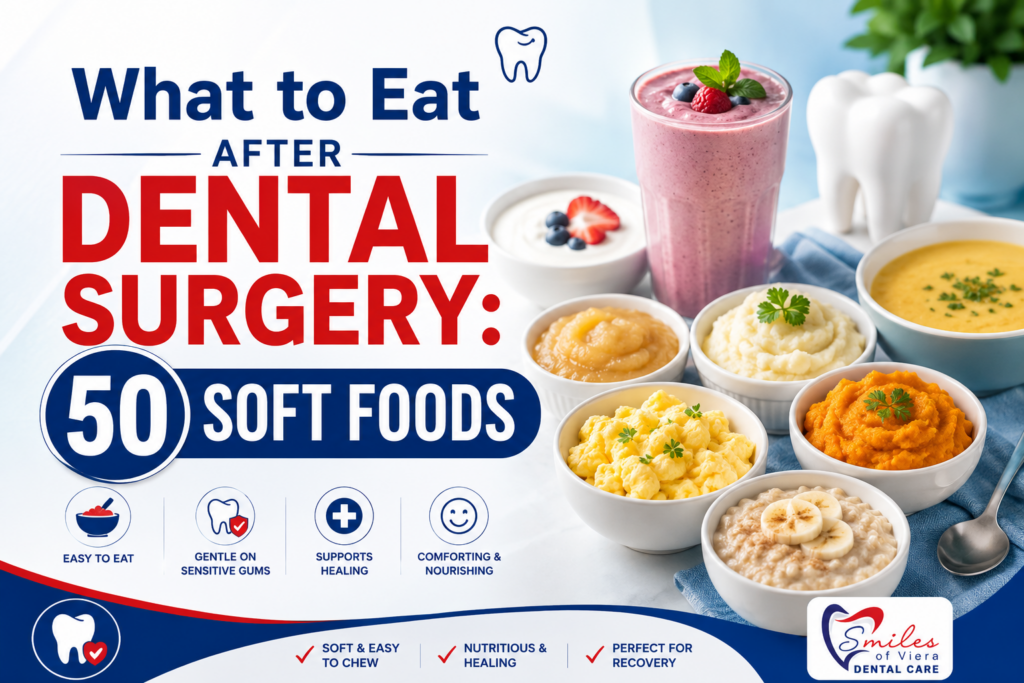
50 Soft Foods to Eat After Dental Surgery
After dental surgery, choosing what to eat can be almost as important as knowing what to avoid. Your mouth may feel sore, swollen, numb, or tender, making crunchy or chewy foods uncomfortable. A soft-food diet can make eating easier while you allow the treated area to recover.
So, what are the best soft foods after dental surgery? Good choices include yogurt, eggs, mashed potatoes, oatmeal, smoothies, soft pasta, applesauce, cottage cheese, and other foods that require little or no chewing.
This guide provides 50 soft foods to eat after dental surgery, along with practical tips for choosing foods safely and knowing when you can begin returning to your usual diet.
Important: Your dentist’s specific post-operative instructions should always take priority. The type of procedure you had, including tooth extraction, wisdom tooth removal, dental implant surgery, or gum surgery, can affect your dietary recommendations.
Why Eat Soft Foods After Dental Surgery?
After dental surgery or tooth removal, chewing can place pressure on a sensitive area. A soft diet can make meals more comfortable while reducing the need for vigorous chewing.
Dental aftercare guidance commonly recommends soft foods during the early recovery period and advises patients to avoid very hot, hard, crunchy, or difficult-to-chew foods.
If you had an extraction, protecting the blood clot in the tooth socket is particularly important because disturbing it can interfere with healing.
The Ultimate List of 50 Soft Foods After Dental Surgery
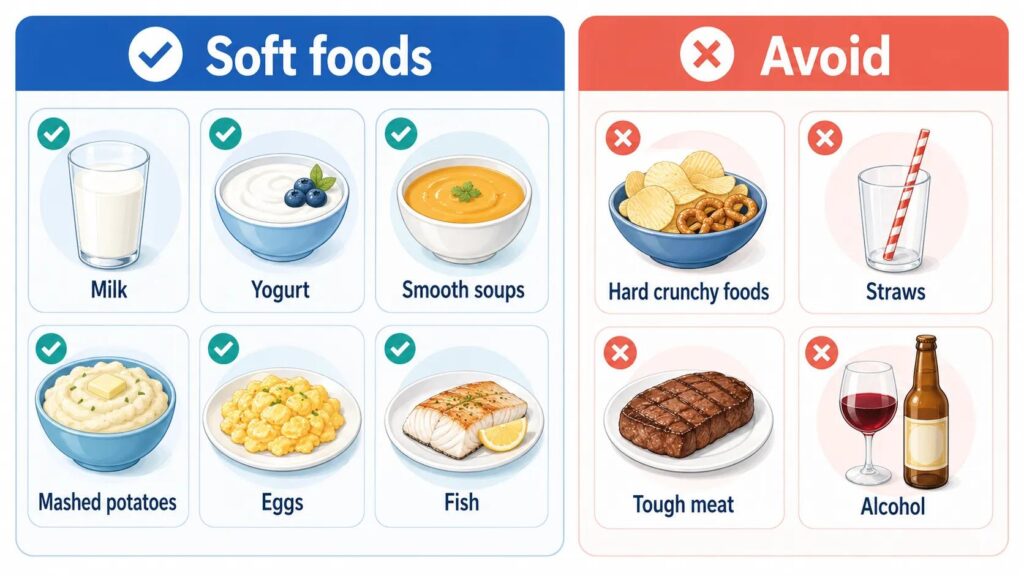
When choosing what to eat, prioritize options that are cool or lukewarm, nutrient-dense, and require minimal to no chewing. Avoid anything hard, crunchy, spicy, acidic, or sticky. Here are 50 soft foods categorized to keep your meals varied and satisfying:
Dairy & Dairy Alternatives
- Greek Yogurt: High in protein and soothingly cool on tender gums.
- Cottage Cheese: Soft and easy to swallow; rich in protein.
- Plain or Flavored Pudding: Smooth and gentle on the mouth.
- Custard: Creamy texture that requires zero chewing.
- Cream Cheese: Can be spread thinly on soft bread or eaten by the spoonful.
- Kefir: A probiotic-rich, drinkable dairy beverage.
- Milk or Dairy Alternatives: Almond, oat, or soy milk packed with essential vitamins.
- Soft Ricotta Cheese: Excellent for a mild, protein-packed snack.
Fruits & Vegetables (Mashed & Blended)
- Mashed Potatoes: A classic comfort food; ensure they are smooth and free of hard skin.
- Applesauce: Naturally sweet, smooth, and easy to digest.
- Mashed Sweet Potatoes: Packed with vitamins A and C to support tissue repair.
- Mashed Bananas: Soft, nutrient-dense, and naturally sweet.
- Steamed & Blended Carrots: Thoroughly mashed or pureed for safe consumption.
- Mashed Cauliflower: A wonderful, low-carb alternative to mashed potatoes.
- Avocado Mash: Rich in healthy fats and calories to maintain energy during recovery.
- Pumpkin Puree: Smooth, velvety, and loaded with beneficial nutrients.
- Blended Vegetable Soup: Nourishing as long as it is completely smooth with no chunks.
- Mashed Peas or Squash: Soft-cooked and mashed into a smooth consistency.
Grains & Carbohydrates
- Oatmeal: Cooked thoroughly until very soft and served lukewarm.
- Cream of Wheat: A warm, smooth cereal option.
- Grits: Smooth, buttery, and comforting.
- Soft-Cooked Polenta: Creamy and satisfying when cooked down.
- Well-Cooked Pasta (Pastina or Orzo): Cooked past al dente so it melts in your mouth.
- White Rice (Very Soft): Cooked with extra water until completely tender.
- Rice Pudding: Soft grains enveloped in a creamy custard base.
- Soft Porridge (Congee): A broken-rice soup cooked until smooth.
Proteins
- Scrambled Eggs: Soft, fluffy, and rich in healing amino acids.
- Soft-Boiled Eggs: Mashed gently with a fork for easy eating.
- Smooth Hummus: Rich in protein and healthy fats (ensure it is mild and not overly spicy or garlicky).
- Tofu (Silken): Extremely soft and easily blended into broths or eaten plain.
- Flaky Soft Fish (Salmon or Tilapia): Thoroughly deboned and broken into tiny, moist flakes.
- Slow-Cooked Shredded Chicken: Cooked until it falls apart and mixed with broth or gravy.
- Bone Broth: Packed with collagen, minerals, and amino acids to support recovery.
- Blended Lentil Soup: Smooth and rich in plant-based iron and protein.
Smoothies & Beverages (No Straws!)
- Protein Smoothies: Blended with fruit and protein powder (always drink directly from a cup, never use a straw).
- Green Smoothies: Blended spinach or kale with banana and yogurt.
- Meal Replacement Shakes: Convenient when your appetite is low.
- Bone Broth Sipping Cups: Warm and comforting nourishment.
- Coconut Water: Hydrating and rich in electrolytes.
- Herbal Tea (Lukewarm): Chamomile or green tea cooled to a safe temperature.
Treats & Desserts
- Plain Gelatin (Jello): Cool, refreshing, and easy to swallow.
- Panna Cotta: Smooth, silky Italian dessert.
- Melted Ice Cream: Let it soften to liquid or semi-liquid form to prevent sudden temperature sensitivity.
- Sorbet (Non-Acidic): Refreshing, provided it lacks seeds or hard chunks.
- Milkshakes: Enjoyed straight from a cup without a straw.
- Smooth Fruit Purees: Pear or peach purees without skin.
- Tapioca Pudding: Soft, gelatinous pearls in a creamy base.
- Mousse (Chocolate or Vanilla): Airy and gentle on the mouth.
- Rice Malt or Honey (Stirred into Warm Milk): For a touch of natural sweetness.
- Smooth Yogurt Popsicles: Let them melt slightly on a spoon before consuming.
Foods to Strictly Avoid After Dental Surgery
While knowing what to eat is important, knowing what to leave off your plate is equally vital for protecting your blood clot and preventing dry socket or infection. Avoid the following:
- Crunchy or Sharp Foods: Chips, crackers, popcorn, and nuts can pierce or lodge inside the surgical site.
- Chewy or Sticky Foods: Caramel, gummy candies, and tough meats require heavy jaw motion and can dislodge healing tissue.
- Spicy and Acidic Foods: Hot sauce, salsa, citrus fruits, and tomato-based products can cause severe irritation and burning sensations.
- Very Hot Foods and Beverages: Hot coffee, tea, or soup can dissolve the protective blood clot. Always let foods cool down to lukewarm.
- Alcohol and Tobacco: Both disrupt the body’s natural healing cascade and drastically increase complication risks.
- Using Straws: The suction created when using a straw can instantly dislodge the blood clot, leading to dry socket. Always drink directly from a cup.
What Should You Avoid After Dental Surgery?
Knowing what not to eat is just as important as choosing soft foods.
For the early recovery period, avoid:
- Chips and other crunchy snacks
- Popcorn
- Nuts and seeds
- Hard pretzels
- Raw carrots and other hard vegetables
- Tough meats
- Chewy candy
- Hard crusty bread
- Very spicy foods if they irritate the surgical area
- Very hot foods and drinks
- Foods with small pieces that could become lodged around the surgical site
After wisdom tooth removal, NHS guidance specifically recommends avoiding hard or crunchy foods and foods that can become trapped in the wound, such as nuts and seeds.
Can You Use a Straw After Dental Surgery?
If you have had a tooth extraction, avoid using a straw unless your dentist specifically tells you otherwise. The suction can potentially disturb the healing blood clot in the socket.
Instead, drink directly from a cup.
How Long Should You Eat Soft Foods After Dental Surgery?
There is no single timeline that applies to every patient.
Some people may only need a soft diet for a few days, while patients recovering from more involved oral surgery may need soft foods for longer. Recovery can depend on the procedure performed, the number of teeth treated, the location of the surgery, and individual healing.
For example, some post-operative guidance recommends soft foods for the first few days, while certain gum surgeries may require a soft diet for about a week.
A practical approach is to gradually reintroduce firmer foods as your comfort improves and your dentist’s instructions allow.
Do not rush the transition simply because a certain number of days has passed.
Tips for Eating After Dental Surgery
A few simple habits can make your recovery period more comfortable:
- Follow your dentist’s instructions first. Your procedure may require specific dietary restrictions.
- Choose soft textures. Foods should require minimal chewing.
- Keep foods at a comfortable temperature. Avoid very hot foods and drinks during the early recovery period.
- Chew away from the surgical area when possible. This can reduce irritation after extraction.
- Stay hydrated. Drink water normally, but avoid straws after extraction unless your dental professional advises otherwise.
- Avoid foods that can become trapped in the surgical site. Nuts, seeds, popcorn, and similar foods may be problematic.
- Gradually return to normal foods. Increase texture and chewing only when it feels comfortable and your dentist approves.
Need Dental Care After a Tooth Extraction or Oral Surgery?
If you need professional dental care for tooth extraction, wisdom tooth removal, dental implant surgery, or other dental procedures, the team at Smiles of Viera is here to help.
Dr. Nenar Barazi, a Florida native, earned her bachelor’s degree from Nova Southeastern University and her Doctor of Dental Medicine degree from Temple University. She has advanced training and experience in restorative dentistry, dental implants, and root canal therapy, and provides a wide range of dental services, including extractions, implants, crowns, bridges, fillings, and root canals.
Dr. Barazi focuses on creating a comfortable and welcoming experience, taking the time to listen to each patient and provide compassionate, personalized dental care.
If you are preparing for a dental procedure or have questions about your recovery, connect with Dr. Nenar Barazi and the Smiles of Viera team in Rockledge, FL to discuss your dental needs and schedule an appointment.
Get Expert Dental Care in Rockledge, FL
Navigating recovery after an oral procedure is much easier when you have a trusted dental team by your side. If you are preparing for an upcoming procedure, experiencing tooth pain, or need guidance on maintaining your oral health, Smiles of Viera is here to support you.
Schedule a dental consultation with our experienced team in Rockledge, FL today to receive personalized, compassionate dental care tailored to your unique smile.
FAQs
No. You should stick exclusively to soft, lukewarm foods for the first few days following your procedure. Reintroducing harder foods too quickly can irritate the wound, cause bleeding, or delay healing.
Most patients remain on a soft food diet for 3 to 7 days, depending on the complexity of the procedure (such as a simple extraction versus a multi-site dental implant placement). Always follow your dentist’s personalized post-op guidelines.
No. You must never use a straw during the initial recovery period. The suction forces created in your mouth can dislodge the blood clot, resulting in a painful condition known as dry socket. Always consume beverages directly from a cup or spoon.
Water, lukewarm herbal tea, and cool broths are ideal. Stay well-hydrated, but ensure all beverages are consumed at a comfortable temperature without straws or ice chips that could traumatize the site.
You can brush your other teeth gently on the day of surgery, but you must avoid direct contact with the surgical site. Starting 24 hours post-op, gentle warm saltwater rinses can help keep your mouth clean without disturbing the healing tissues.
Yes, items like yogurt, cottage cheese, and milk are excellent choices because they are soft, soothing, and packed with nutrients. Unless you have a specific dietary intolerance, dairy is a staple of post-op recovery.
Mild discomfort and minor oozing are normal during the first 24 to 48 hours. However, if you experience severe pain, uncontrolled bleeding, swelling that worsens after three days, or a fever, contact your dental office immediately.
Follow-up schedules vary based on your treatment. Your dental team will provide exact instructions before you leave the clinic and will schedule a post-op check to monitor your healing progress.
