- August 7, 2026
- By: Admin@@SMiles0fviEr@
- No Comments
Your Guide to Dental Implant Surgery Aftercare and Recovery
Choosing to replace a missing tooth with a permanent restoration is a life-changing investment in your oral health, confidence, and overall well-being. Whether you are preparing for your procedure or are currently in the healing phase, proper dental implant aftercare is the single most important factor in ensuring the long-term success of your new smile.
At Smiles of Viera, our team is dedicated to supporting you at every stage, from your initial consultation and advanced radiographic examination to your final restoration and post-operative recovery. Here is a comprehensive guide to navigating your dental implant recovery, managing your timeline, and optimizing your dental care at home.
Important: Every patient’s recovery is different. Always follow the specific post-operative instructions provided by your dentist or oral surgeon.
What to Expect Immediately After Surgery
Dental implant surgery is a precise, multi-step procedure where a biocompatible titanium or zirconia post is placed into the jawbone to act as an artificial root. Because minor oral surgery is performed, your body needs time to rest and begin the natural healing process.
Immediately following your procedure, a gauze pad will be placed over the surgical site to help stop any initial bleeding. It is normal to experience minor bleeding, swelling, and mild discomfort as the anesthesia wears off. However, following a strict set of post-operative guidelines will keep you comfortable and protect the surgical site.
Essential Dental Implant Aftercare Tips
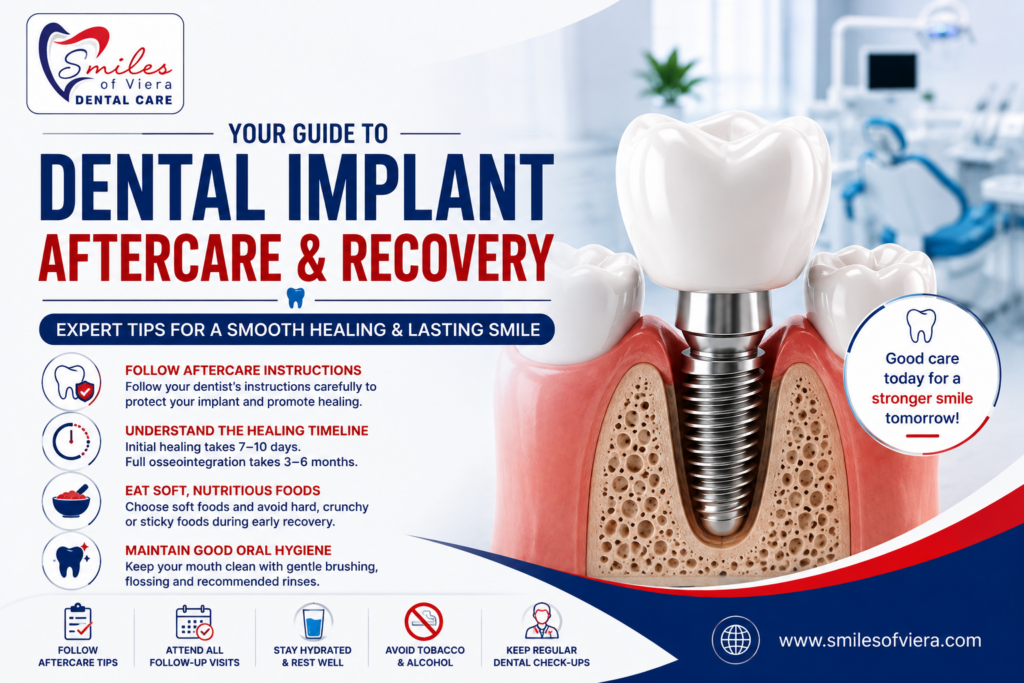
Proper aftercare for tooth implant procedures prevents complications like infection and encourages the bone to fuse securely around the implant post (a process called osseointegration). Implement these best practices during your first few days at home:
- Manage Bleeding and Protect the Blood Clot: Keep the initial gauze pad in place for about 30 to 45 minutes after leaving the clinic. Do not spit forcefully, suck through a straw, or touch the surgical area with your tongue or fingers, as this can dislodge the protective blood clot.
- Control Swelling with Cold Compresses: Apply an ice pack or cold compress to the outside of your cheek near the surgical site in 15-minute intervals (15 minutes on, 15 minutes off) during the first 24 to 48 hours to minimize swelling.
- Stick to a Soft Food Diet: For the first few days, nourish your body with nutrient-dense, cool, or lukewarm soft foods. Excellent choices include yogurt, smoothies (without a straw), mashed potatoes, scrambled eggs, and soups. Avoid hot, spicy, crunchy, or sticky foods that could irritate the site.
- Modify Your Oral Hygiene Routine: You must keep your mouth clean, but be gentle. Continue brushing your other teeth carefully, but avoid brushing directly over the implant site for the first few days unless instructed otherwise. Your dentist may recommend a specialized antimicrobial mouthwash or gentle warm saltwater rinses starting 24 hours post-surgery.
- Strictly Avoid Tobacco and Alcohol: Smoking or using tobacco products drastically restricts blood flow to the gums and jawbone, significantly increasing the risk of implant failure. Alcohol can also interfere with healing and interact negatively with prescribed medications.
Understanding the Dental Implant Recovery Time
Patients frequently ask about the expected dental implant recovery time. It is helpful to divide recovery into two main categories: initial soft tissue healing and complete osseointegration.
- The First 7 to 10 Days: Most surface tenderness, swelling, and minor discomfort subside within the first week to ten days. Many patients return to work and light daily routines within 48 to 72 hours, depending on the complexity of the placement.
- The Full Osseointegration Period (3 to 6 Months): While the surface heals quickly, the jawbone needs several months to firmly and permanently fuse with the implant post. This biological timeline varies per individual based on bone density and overall health, but it is a vital phase that ensures your implant can withstand the natural forces of biting and chewing.
Recovery time may vary based on the type of implant procedure performed, your bone health, and whether additional treatments such as bone grafting were required. To better understand the available treatment options, explore our guide on the different types of dental implants and techniques.
Long-Term Dental Implant Care
Once your implant has fully integrated and your permanent crown, bridge, or denture is securely attached, maintaining your investment is remarkably straightforward. Because artificial teeth cannot decay, some patients mistakenly assume they require less attention. In reality, aftercare dental implants demand the same rigorous dedication as natural teeth to prevent gum inflammation (peri-implantitis).
- Brush and Floss Daily: Brush at least twice a day with a soft-bristled toothbrush and non-abrasive toothpaste. Use specialized floss, interdental brushes, or a water flosser designed around implants to keep the gum line pristine.
- Attend Regular Dental Check-ups: Routine professional cleanings and examinations at Smiles of Viera allow our dental team to monitor the health of your gums, bite alignment, and the hardware supporting your restoration.
What Can You Eat After Dental Surgery?
Your diet can make recovery more comfortable, especially during the first few days. Soft foods that require minimal chewing are often easier to eat while your mouth is healing.
Depending on your dentist’s recommendations, suitable options may include:
- Yogurt
- Applesauce
- Mashed potatoes
- Scrambled eggs
- Smooth soups that are not too hot
- Soft pasta
- Oatmeal
- Mashed vegetables
- Soft fish
- Smoothies eaten without a straw, if approved by your dentist
As your healing progresses, you can gradually return to your regular diet based on your dentist’s recommendations.
Avoid hard, crunchy, sticky, or very chewy foods that could irritate the surgical area. Very hot foods and beverages may also be uncomfortable immediately after surgery.
When Should You Contact Your Dentist?
Some discomfort, swelling, and tenderness can occur after implant surgery. However, you should contact your dental office if you experience symptoms that are severe, unexpected, worsening, or concerning.
Contact your dentist promptly if you notice:
- Severe or increasing pain
- Significant or persistent bleeding
- Increasing swelling
- Signs of infection
- Unusual drainage from the surgical area
- Problems with the implant or temporary restoration
- Any symptom that concerns you
If you are unsure whether a symptom is part of normal healing, it is better to contact your dental team and ask for guidance.
How Can You Support a Smooth Recovery?
Following these simple habits can help support your dental surgery recovery:
- Follow all post-operative instructions carefully.
- Take prescribed medications as directed.
- Choose soft foods during the initial healing period.
- Drink plenty of water unless your dentist has advised otherwise.
- Avoid smoking and tobacco products.
- Keep your mouth clean according to your dentist’s instructions.
- Avoid putting unnecessary pressure on the surgical area.
- Attend all scheduled follow-up appointments.
- Contact your dentist if you notice unusual or worsening symptoms.
The most important step is to follow the personalized recommendations provided by your dental professional because your recovery needs may differ from those of another patient.
When Should You Contact Your Dentist?
Some discomfort and swelling can be expected after dental surgery, but you should contact your dentist if you experience symptoms that concern you or appear to be getting worse rather than improving.
Contact your dental office if you notice:
- Severe or worsening pain
- Significant or persistent bleeding
- Increasing swelling
- Fever or signs of infection
- Unusual discharge or a persistent bad taste
- Difficulty swallowing or breathing
- A dental implant that feels loose or unstable
If you experience difficulty breathing, severe facial swelling, or another potentially life-threatening emergency, seek immediate medical attention.
Why Follow-Up Appointments Matter
Follow-up visits allow your dentist to check how your mouth is healing and identify potential concerns early. For dental implants, these appointments are particularly important because your dental professional needs to monitor the healing process before moving forward with the next stage of treatment.
Do not skip your follow-up appointments, even if you feel that your mouth is healing normally.
Take the Next Step Toward a Healthier Smile
Dental implants can be an effective option for replacing missing teeth, but successful treatment involves more than the surgical procedure itself. Proper dental implant aftercare, good oral hygiene, healthy habits, and regular follow-up care all contribute to a healthy recovery and long-term oral health.
We Are Here for Your Smile
A successful smile restoration is a partnership between you and your dental care team. Dr. Panol and the compassionate staff at Smiles of Viera are committed to guiding you seamlessly from your first appointment through complete post-operative healing. As a trusted Rockledge dental practice, we provide personalized care to help you maintain a healthy, confident smile.
If you are considering restoring a missing tooth, have questions after dental surgery, or are due for a routine check-up, we are ready to help.
Contact Smiles of Viera to schedule a consultation and discuss your options for restoring your smile.
FAQs
Dental implant surgery is generally considered a minor oral surgical procedure rather than a major surgery. It is performed under local anesthesia, and many patients report that the procedure is more comfortable than they expected.
The complexity depends on factors such as the number of implants being placed, bone quality, and whether additional procedures like bone grafting are needed. Your dentist will explain your personalized treatment plan before surgery.
Dental implant surgery is a routine procedure for experienced dental professionals. Advanced imaging and careful treatment planning help ensure precise implant placement. While every patient’s situation is unique, most implant procedures are completed with minimal discomfort, and patients can usually return to their normal daily activities within a few days, depending on their dentist’s recommendations.
Initial healing usually takes about 7 to 10 days, during which swelling and tenderness gradually improve. However, the jawbone requires approximately 3 to 6 months to fully bond with the implant through a natural process called osseointegration. Your exact recovery timeline will depend on your oral health, bone condition, and whether additional procedures were performed.
The length of dental implant surgery depends on the complexity of your treatment. Placing a single implant often takes about 1 to 2 hours, while multiple implants or procedures involving bone grafting may require additional time. Your dentist can provide a more accurate estimate during your consultation.
For most patients, the most challenging part is the first 24 to 72 hours after surgery, when swelling, tenderness, and mild discomfort are typically at their highest. These symptoms are usually manageable with prescribed or recommended medications, cold compresses, and proper aftercare. Following your dentist’s instructions can help make recovery more comfortable.
After dental implant surgery, you should avoid activities that may interfere with healing, including:
- Smoking or using tobacco products
- Drinking alcohol while healing or while taking prescribed medications
- Using a straw or spitting forcefully during the first 24 hours
- Eating hard, crunchy, sticky, or very hot foods
- Vigorous exercise for the first few days, if advised by your dentist
- Touching or disturbing the surgical site with your fingers or tongue
Always follow the specific instructions provided by your dental team.
Most patients experience the greatest discomfort within the first 24 to 48 hours after surgery. Swelling often peaks around the second or third day before gradually improving. Pain should steadily decrease as healing progresses. If your pain becomes severe or worsens instead of improving, contact your dentist promptly.
Neither treatment is universally better because they serve different purposes. A root canal is recommended when a damaged or infected natural tooth can still be saved, allowing you to keep your original tooth. A dental implant is typically recommended when a tooth cannot be restored and must be replaced. Your dentist will evaluate your oral health and recommend the most appropriate treatment based on your individual needs and long-term oral health goals.
