- October 8, 2026
- By: Admin@@SMiles0fviEr@
- No Comments
How to Know If Your Wisdom Teeth Removal Is Healing Normally
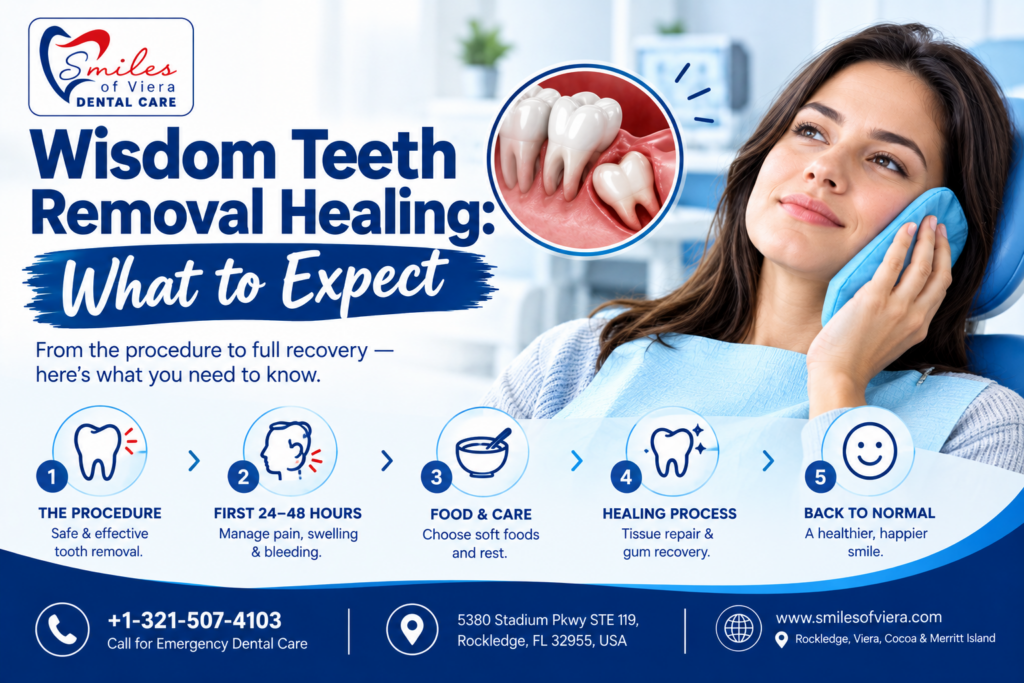
If you’ve recently had your wisdom teeth removed, it is normal to wonder whether your recovery is progressing as it should. Wisdom teeth removal healing usually involves some pain, swelling, tenderness, and difficulty chewing during the first few days, followed by gradual improvement. Most people feel significantly better within several days, although the extraction sites can continue healing for weeks.
Knowing what to expect can make recovery less stressful. It can also help you recognize when a symptom is part of normal healing and when you should contact your dentist.
In this guide, we’ll explain the typical wisdom teeth removal healing timeline, what you may experience each day, how to care for the extraction sites, and which symptoms deserve professional attention.
Important: Every patient heals differently. Your dentist or oral surgeon’s specific post-operative instructions should always take priority over general information.
What Does Normal Wisdom Teeth Removal Healing Look Like?
Normal healing generally means that your discomfort, swelling, and other symptoms gradually improve rather than becoming increasingly severe.
During recovery, you may experience:
- Mild to moderate pain or tenderness
- Swelling around the cheeks or jaw
- Minor bleeding or blood-tinged saliva shortly after surgery
- Jaw stiffness
- Difficulty chewing or opening your mouth
- Sensitivity around the extraction sites
- A need to eat softer foods temporarily
These symptoms are generally most noticeable during the first few days and should gradually improve.
A key sign that your recovery is progressing normally is steady improvement. If pain or swelling becomes significantly worse after initially improving, or if you develop other concerning symptoms, it’s important to contact your dental professional.
Wisdom Teeth Removal Healing Timeline: What to Expect
Healing isn’t exactly the same for everyone. The difficulty of the extraction, number of teeth removed, your overall health, and how closely you follow aftercare instructions can all influence recovery.
Here’s a general overview.
First 24 Hours: Protect the Blood Clot
The first day is particularly important because a blood clot forms in each extraction socket. This clot helps protect the underlying tissue and supports the healing process.
You may experience:
- Some bleeding or oozing
- Facial or jaw swelling
- Discomfort as the anesthesia wears off
- Tenderness around the extraction sites
- Difficulty eating normally
During this period, follow your dentist’s instructions carefully.
Avoid actions that can disturb the extraction site, including vigorous rinsing, spitting, smoking, or using a straw. Suction can interfere with the blood clot and increase the risk of dry socket.
Rest and choose foods that are soft and easy to eat.
For more information about eating during recovery, patients can also refer to Smiles of Viera’s existing guide on what to eat after wisdom teeth removal.
Days 2–3: Swelling May Be at Its Highest
Many patients notice that swelling is more obvious during the first few days rather than immediately after surgery.
You may still have:
- Swollen cheeks
- Jaw soreness
- Mild to moderate pain
- Bruising
- Limited ability to open your mouth
- Difficulty chewing
This does not necessarily mean something is wrong.
In fact, swelling and discomfort can be expected during the early recovery period. The important thing is what happens next: symptoms should begin trending toward improvement rather than continuing to worsen.
Continue following your prescribed or recommended pain-management routine and keep the surgical area clean according to your dentist’s instructions.
Days 4–7: Recovery Should Begin Feeling Easier
By the middle to end of the first week, many patients notice that their pain and swelling have decreased.
You may find that:
- Eating becomes easier
- Your jaw feels less stiff
- Swelling begins to decrease
- You can gradually return to more normal activities
- The extraction areas feel less tender
However, the sockets are not necessarily completely healed yet.
Continue avoiding anything that could irritate the surgical sites, including hard or crunchy foods if they are uncomfortable. Maintain good oral hygiene while being careful around the extraction areas.
Week 2: Feeling Better Doesn’t Mean Healing Is Finished
By the second week, many of the noticeable symptoms may have significantly improved or disappeared.
However, healing continues underneath the gum tissue.
You may still notice:
- Mild tenderness
- Small areas of sensitivity
- Slight jaw stiffness
- Healing extraction sockets
Cleveland Clinic notes that while many symptoms improve within about a week, the extraction sockets may take considerably longer to fully heal.
Don’t assume that feeling better means you should immediately return to every normal habit. Continue following your dentist’s recommendations until the surgical sites have adequately healed.
Weeks 3–4: The Extraction Sites Continue to Heal
By this stage, the gum tissue should continue growing over the extraction areas.
For many patients, everyday activities and eating are becoming much easier. However, deeper tissue and bone healing can take longer than the visible gum healing.
Your dentist may recommend a follow-up appointment depending on your procedure and individual recovery.
If your symptoms are not improving as expected, don’t wait for your next routine appointment. Contact your dental office for advice.
What Are Signs of Normal Wisdom Teeth Removal Healing?
One of the easiest ways to think about recovery is to look for gradual improvement.
Signs that your wisdom teeth removal may be healing normally include:
1. Pain Gradually Decreases
Some discomfort is expected after extraction. It should generally become easier to manage as the days pass.
You should be more concerned if severe pain suddenly develops or becomes substantially worse after initially improving.
2. Swelling Starts to Go Down
Swelling is common during the early stages of recovery. It should gradually decrease rather than continually becoming more severe.
3. Bleeding Becomes Minimal
Some oozing or blood-tinged saliva can occur shortly after surgery. Persistent or heavy bleeding is different and requires professional advice.
4. Eating Becomes Easier
You may initially need soft foods. As tenderness and jaw stiffness improve, you can gradually introduce more foods according to your dentist’s recommendations.
5. Your Jaw Becomes Less Stiff
Difficulty opening your mouth can occur after wisdom teeth removal. Gradual improvement is a reassuring sign.
What Are Warning Signs After Wisdom Teeth Removal?
While you prepare to visit the dental office, taking the correct initial actions can preserve your tooth structure and minimize discomfort:
- For a Knocked-Out Tooth:
- Pick up the tooth strictly by the crown (top chewing surface), do not touch the root.
- Gently rinse with clean water if dirty; do not scrub or use soap.
- Try to insert the tooth back into its socket if possible. If not, store it in a small container of cold milk or saliva.
- Bring it directly to your emergency dentist.
- For Severe Swelling or Abscess:
- Apply a cold compress to the outside of your cheek for 10-15 minutes at a time.
- Rinse gently with warm salt water to soothe inflamed tissues.
- Never attempt to pop or drain a gum swelling yourself.
- For Soft Tissue Injuries (Lips, Tongue, Gums):
- Apply direct pressure with a clean piece of gauze or cloth for 15 minutes.
- Apply an ice pack externally to reduce swelling.
- If bleeding persists beyond 20 minutes, seek emergency medical care.
When to Visit the ER vs. Seeing Your Dentist
Not every uncomfortable symptom means there is a complication. However, certain changes should prompt you to contact your dental professional.
Call your dentist if you experience:
- Severe or worsening pain
- Swelling that becomes worse after the initial recovery period
- Persistent or heavy bleeding
- Fever
- Pus or drainage from the extraction site
- A persistent foul taste or smell accompanied by pain
- Difficulty swallowing or opening your mouth
- Symptoms that were improving and then suddenly become worse
These symptoms can be associated with complications such as infection or dry socket and should be evaluated by a dental professional.
Do not attempt to diagnose an infection or dry socket based solely on an online article. Your dentist can examine the area and determine whether additional treatment is necessary.
How Can You Support Wisdom Teeth Removal Healing?
Following your post-operative instructions is one of the most important things you can do.
Protect the extraction sites
Avoid activities that can disturb the blood clot, particularly during the early recovery period.
Keep your mouth clean
Continue brushing and flossing the unaffected areas while following your dentist’s instructions about cleaning around the surgical sites.
Choose appropriate foods
Soft foods are often easier to tolerate during the first several days. Gradually return to your normal diet as your comfort improves.
Stay hydrated
Water is generally a good choice during recovery. Avoid using a straw unless your dental professional specifically tells you otherwise.
Avoid smoking
Smoking can interfere with healing and increase the risk of complications after extraction.
Don’t rush back into strenuous activity
Your dentist may recommend limiting strenuous exercise during the early recovery period because increased activity can contribute to bleeding, swelling, or discomfort.
Wisdom Teeth Removal Recovery: The Bottom Line
Normal wisdom teeth removal healing is usually a gradual process. Pain, swelling, tenderness, and jaw stiffness can be expected during the early days, but these symptoms should generally become less noticeable as recovery progresses.
The most important thing to watch is the overall direction of your recovery. Improving symptoms are reassuring. Severe, persistent, or worsening symptoms deserve professional attention.
If you’re preparing for wisdom teeth removal or you’re concerned that your recovery isn’t progressing normally, getting personalized guidance from a dental professional is the safest approach.
Need Wisdom Teeth Care in Rockledge, FL?
If you have questions about wisdom tooth removal, extraction recovery, or a concerning symptom after surgery, the team at Smiles of Viera can evaluate your situation and provide personalized guidance.
The practice provides wisdom tooth surgery and surgical extraction services for patients in Rockledge, Viera, Cocoa, Merritt Island, and surrounding communities.
Schedule a dental consultation with Smiles of Viera to discuss your wisdom teeth or post-extraction concerns.
FAQs
How long does wisdom teeth removal take to heal?
Many patients feel substantially better within several days to about two weeks, but complete healing of the extraction socket can take longer. The exact timeline depends on the complexity of the extraction and individual healing factors.
How do I know if my wisdom teeth removal is healing normally?
Gradual improvement in pain, swelling, bleeding, jaw stiffness, and eating ability is generally a reassuring sign. If symptoms become significantly worse instead of improving, contact your dentist.
When should wisdom teeth removal pain go away?
Wisdom tooth extraction pain should generally become easier to manage as the first several days pass. Persistent or severe pain, particularly pain that worsens after initially improving, should be evaluated by a dental professional.
Is swelling normal after wisdom teeth removal?
Yes, swelling is common after wisdom teeth removal, particularly during the first few days. It should generally begin improving rather than becoming progressively worse.
What is a dry socket after wisdom teeth removal?
Dry socket occurs when the protective blood clot in an extraction socket is lost or becomes dislodged before adequate healing occurs. It can cause significant pain and typically develops a few days after extraction.
Can I brush my teeth after wisdom teeth removal?
Yes, but you should follow your dentist’s instructions and avoid disturbing the extraction sites. Keeping the rest of your mouth clean is important, while aggressive brushing directly over the surgical area can interfere with healing.
Can I eat normally after wisdom teeth removal?
You should generally begin with softer foods and gradually return to your normal diet as your comfort and healing allow. Hard, crunchy, or difficult-to-chew foods may irritate the surgical area during early recovery.
