- September 24, 2026
- By: Admin@@SMiles0fviEr@
- No Comments
What Is Considered a Dental Emergency? A Guide to Urgent Symptoms and Care
Dental pain, accidental injuries, and sudden mouth swelling often happen without warning. When faced with an aching tooth or a chipped molar, many patients pause to ask: what is considered a dental emergency, and what can wait for a standard office appointment?
Knowing how to differentiate between urgent dental crises and routine dental issues helps protect your teeth, prevents minor problems from spreading into severe infections, and saves you unnecessary pain.
At Smiles of Viera, our clinical team led by Dr. M. Ahmed provides compassionate emergency dental care for patients across Rockledge, FL, Viera, and nearby Brevard County communities. This guide covers the key signs of a dental emergency, practical first-aid steps, and when to seek immediate treatment.
Defining a Dental Emergency
In general dentistry, a dental emergency is any oral health issue that involves severe pain, uncontrollable bleeding, a high risk of infection, or sudden physical trauma to the teeth, gums, or jaw.
If leaving a condition untreated for 24 to 48 hours would lead to permanent tooth loss, systemic infection, or excruciating discomfort, it requires urgent dental evaluation.
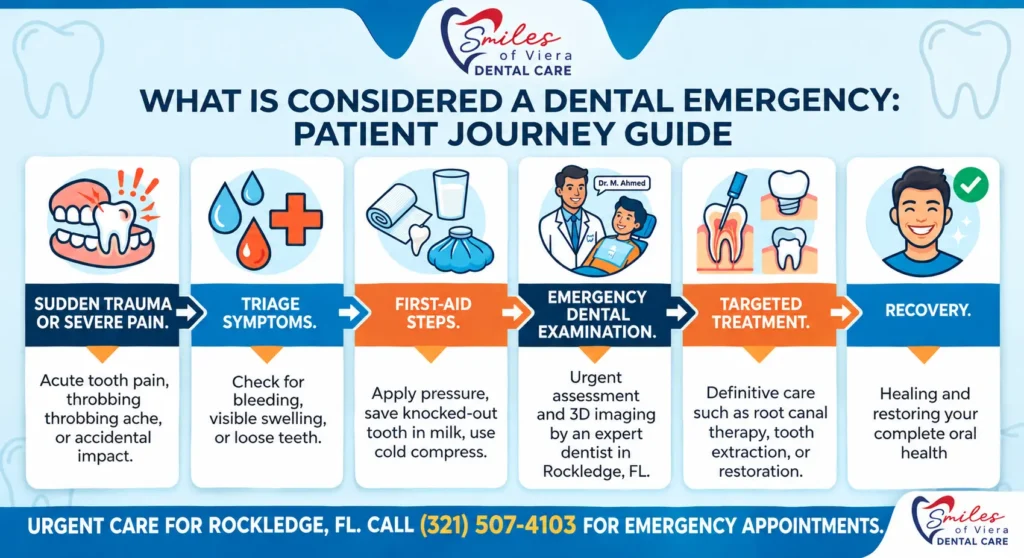
What Counts as a True Dental Emergency?
If you or a family member experience any of the following symptoms, seek prompt professional dental intervention:
1. Severe, Persistent Tooth Pain
Sharp, throbbing, or persistent toothaches that keep you awake or do not respond to over-the-counter pain relievers often signal deep tooth decay, root nerve damage, or an infection inside the pulp chamber.
2. A Knocked-Out (Avulsed) Permanent Tooth
A knocked-out adult tooth is one of the most time-sensitive dental emergencies. If treated by a dentist within 30 to 60 minutes, there is a high chance the tooth can be successfully re-implanted into the socket.
3. Dental Abscess or Swelling
Patients frequently ask: is a tooth abscess considered an emergency? Yes, a tooth abscess is always considered a true dental emergency. An abscess is a localized collection of pus caused by a bacterial infection at the root of a tooth or in the surrounding gum tissue. If left untreated, the infection can spread into the jawbone, bloodstream, or surrounding facial tissues.
- Warning Signs of an Advanced Abscess: Facial swelling, fever, a pimple-like bump on the gums, foul taste, or difficulty swallowing and breathing.
4. Loose or Displaced Adult Teeth
Permanent adult teeth should never feel loose or shifted out of alignment. If trauma from a sport, fall, or impact loosens a tooth, immediate stabilization by a dentist is required to save the nerve and surrounding bone.
5. Uncontrolled Bleeding from the Gums or Mouth
While minor bleeding after flossing can indicate early gum disease, continuous, heavy bleeding after a traumatic impact or extraction that does not stop with light pressure requires immediate clinical attention.
6. Fractured or Broken Teeth with Severe Pain
A minor cosmetic chip off enamel can usually wait a few days. However, a major fracture that exposes the inner pink dentin or yellow pulp layer, accompanied by severe pain or bleeding, is an emergency.
Emergency vs. Non-Emergency: Triage Guide
Not all dental discomfort demands an immediate after-hours visit. Understanding what’s considered a dental emergency versus an urgent routine concern helps you choose the right care setting.
| Symptom / Condition | Emergency Level | Recommended Action |
| Knocked-out adult tooth | 🔴 Critical Emergency | Contact dentist immediately; visit within 30–60 mins |
| Abscess, fever, facial swelling | 🔴 Critical Emergency | Seek immediate dental or urgent medical evaluation |
| Severe, throbbing tooth pain | 🔴 Critical Emergency | Schedule same-day emergency appointment |
| Cracked tooth with mild pain | 🟡 Urgent (1–2 Days) | Call office for next available opening |
| Lost filling or crown (no pain) | 🟡 Urgent (1–2 Days) | Keep clean; schedule appointment within a few days |
| Minor chip on enamel (no pain) | 🟢 Non-Emergency | Address during regular office hours |
| Food stuck between teeth | 🟢 Non-Emergency | Gently floss; do not use sharp metal objects |
Step-by-Step First Aid for Common Dental Emergencies
While you prepare to visit the dental office, taking the correct initial actions can preserve your tooth structure and minimize discomfort:
- For a Knocked-Out Tooth:
- Pick up the tooth strictly by the crown (top chewing surface), do not touch the root.
- Gently rinse with clean water if dirty; do not scrub or use soap.
- Try to insert the tooth back into its socket if possible. If not, store it in a small container of cold milk or saliva.
- Bring it directly to your emergency dentist.
- For Severe Swelling or Abscess:
- Apply a cold compress to the outside of your cheek for 10-15 minutes at a time.
- Rinse gently with warm salt water to soothe inflamed tissues.
- Never attempt to pop or drain a gum swelling yourself.
- For Soft Tissue Injuries (Lips, Tongue, Gums):
- Apply direct pressure with a clean piece of gauze or cloth for 15 minutes.
- Apply an ice pack externally to reduce swelling.
- If bleeding persists beyond 20 minutes, seek emergency medical care.
When to Visit the ER vs. Seeing Your Dentist
Emergency rooms are equipped to handle general trauma, severe systemic infections, and uncontrolled physical bleeding. However, ERs rarely have staff dentists on site to perform restorative root canals, place dental crowns, or save knocked-out teeth.
Go directly to the nearest Emergency Room (ER) or call 911 if you experience:
- Severe facial or neck swelling that impairs breathing or swallowing
- A suspected fractured or broken jaw bone
- Uncontrollable oral bleeding that does not slow down with direct pressure
- Sudden head trauma accompanied by loss of consciousness, confusion, or dizziness
Contact Smiles of Viera for your emergency appointment if you have:
- Severe toothaches or dental nerve pain
- A knocked-out, cracked, or loose tooth
- A visible dental abscess on the gums without airway compromise
- Damaged dental restorations causing pain or sharp edges
Reliable Emergency Dental Care in Rockledge, FL
If you or a loved one are experiencing acute tooth pain, swelling, or sudden oral trauma, prompt care makes all the difference in preserving your smile.
At Smiles of Viera, Dr. M. Ahmed and our clinical team provide gentle, precise emergency evaluations and treatments, including root canal therapy, tooth extractions, and restorative care, for patients across Rockledge, Viera, and Brevard County.
