
- July 21, 2026
- By: Admin@@SMiles0fviEr@
- No Comments
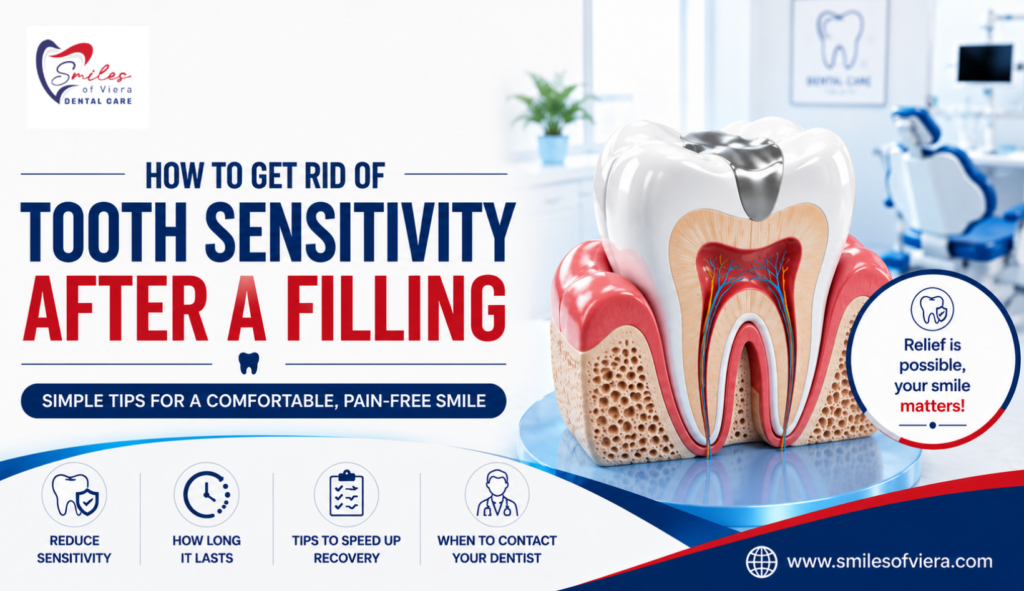
How to Get Rid of Tooth Sensitivity After a Filling
Tooth sensitivity after filling treatment is a common concern, especially when the treated tooth reacts to cold drinks, hot food, sweet items, or biting pressure. In many cases, this sensitivity is temporary and improves as the tooth settles after the dental procedure. However, if the discomfort becomes severe, lasts too long, or makes chewing difficult, it may be a sign that the filling needs to be checked by a dentist.
A dental filling is used to repair a tooth affected by decay, minor damage, or structural weakness. Tooth-coloured fillings are especially popular because they restore the tooth while blending naturally with the surrounding smile. At Smiles of Viera, tooth-coloured fillings are designed to repair damaged teeth while maintaining a natural appearance and comfortable function.
Understanding why sensitivity happens and what you can do about it can help you recover more comfortably and know when professional care is needed.
Why Does Tooth Sensitivity Happen After a Filling?
A filling may seem like a simple dental treatment, but the tooth goes through several steps during the procedure. The dentist removes the decayed or damaged portion, cleans and prepares the tooth, places the filling material, shapes it, cures it, polishes it, and checks the bite.
Because of this process, the tooth nerve may become temporarily irritated. This does not always mean something is wrong. The tooth simply needs time to adjust after treatment.
The most common causes of tooth sensitivity after filling include:
1. Temporary Nerve Irritation
Inside every tooth is a soft inner area called the pulp, which contains nerves and blood vessels. When decay is removed and the filling is placed, the tooth may become sensitive for a short period.
This sensitivity is more likely if the cavity was deep or close to the nerve. You may feel a sharp sensation when drinking cold water, eating sweets, or breathing in cold air.
2. A Deep Cavity Before Treatment
If decay had already reached deeper layers of the tooth, the nerve may already have been irritated before the filling was placed. Even after the decay is removed, the tooth may take time to calm down.
Deep fillings can sometimes remain sensitive longer than small fillings. The important thing is whether the sensitivity is improving gradually or becoming worse.
3. A High Filling
Sometimes, a new filling may be slightly higher than the natural bite level. Even a tiny difference can cause pressure when you close your mouth or chew.
A high filling often causes pain when biting down, chewing hard foods, or tapping the treated tooth. This can usually be corrected by the dentist with a simple bite adjustment.
4. Gum Irritation Around the Tooth
The gum tissue around the treated tooth may feel sore after the filling appointment. This can happen due to dental instruments, isolation materials, or normal handling during treatment.
Gum-related tenderness usually improves within a few days with gentle brushing and normal oral hygiene.
5. Bonding Sensitivity
Tooth-coloured fillings are bonded to the tooth structure. The bonding process helps the filling stay secure and natural-looking, but some patients may feel short-term sensitivity after composite filling placement.
This does not automatically mean the filling has failed. In many cases, the tooth simply needs time to adjust.
How Long Does Tooth Sensitivity After a Filling Last?
Mild tooth sensitivity after a filling often improves within a few days and may fully settle within one to two weeks. Some deeper fillings may take longer, especially if the tooth was already irritated before treatment.
Normal sensitivity usually feels short and sharp. It appears when the tooth is exposed to cold, heat, sweets, or pressure, and then goes away quickly.
Sensitivity may need dental attention if it:
- Gets worse instead of better
- Lasts for several weeks
- Causes pain every time you bite
- Turns into throbbing pain
- Wakes you up at night
- Lingers after hot or cold food is removed
- Comes with swelling or a bad taste
If the pain does not feel normal, it is better to have the tooth checked early.
How to Get Rid of Tooth Sensitivity After a Filling
The right solution depends on the cause. Some sensitivity improves with home care, while other cases need a dentist to adjust or examine the filling.
Use Toothpaste for Sensitive Teeth
A desensitizing toothpaste can help reduce discomfort from temperature changes. These toothpastes are made to calm sensitivity by reducing how strongly the tooth reacts to outside triggers.
Use it consistently for at least a couple of weeks. Do not switch products every few days, because sensitive toothpaste needs regular use to be effective.
Brush Gently With a Soft Toothbrush
Hard brushing can make sensitivity worse, especially around the gumline. Use a soft-bristled toothbrush and avoid scrubbing aggressively.
Brush in small circular motions instead of using harsh back-and-forth pressure. The goal is to clean the tooth without irritating the enamel, gums, or recently treated area.
Avoid Very Hot and Very Cold Foods for a Few Days
If your tooth reacts strongly after the filling, avoid extreme temperatures for a short time. Ice-cold water, hot tea, coffee, ice cream, and very hot soups may trigger discomfort.
Choose room-temperature or mildly warm foods and drinks until the sensitivity starts improving.
Chew on the Opposite Side Temporarily
For the first few days, try chewing on the opposite side of your mouth. This reduces pressure on the filled tooth and gives it time to settle.
Avoid very hard foods like nuts, ice, hard candy, and crunchy snacks until the tooth feels normal again.
Limit Acidic and Sugary Foods
Acidic foods and drinks can trigger sensitive teeth. Citrus fruits, soda, sports drinks, vinegar-based foods, and sour candies may increase discomfort.
Sugary foods can also irritate sensitive teeth and contribute to future decay. If you consume acidic or sweet items, rinse with water afterward and maintain good oral hygiene.
Do Not Ignore Pain When Biting
If your tooth hurts mainly when you bite down, the filling may need adjustment. This is one of the most common reasons people continue to feel discomfort after a filling.
A dentist can check your bite and smooth the filling so your teeth meet properly. This is not something you should try to fix at home.
Keep the Area Clean
Some people avoid brushing near a sensitive filling because they are afraid of pain. However, plaque buildup can make the area more irritated.
Continue brushing twice a day and flossing gently. Clean around the filling carefully, but do not apply heavy pressure.
Avoid Whitening Products During Recovery
Whitening toothpaste, strips, and bleaching products can sometimes increase sensitivity. If your tooth is already sensitive after a filling, avoid whitening treatments until your dentist says it is safe.
Your tooth needs time to recover before adding any extra irritation.
When Should You Call the Dentist?
You should contact your dentist if tooth sensitivity after filling treatment does not improve or starts affecting daily eating and drinking.
Call a dentist if you notice:
- Sharp pain when biting
- Sensitivity lasting more than two weeks
- Pain that lingers after hot or cold foods
- Throbbing or spontaneous toothache
- Swelling around the tooth or gums
- A cracked, loose, or rough filling
- Difficulty chewing on the treated side
These symptoms may mean the filling is too high, the tooth nerve is inflamed, the filling is not sealed properly, or there is another dental issue that needs treatment.
Can a Dentist Fix Tooth Sensitivity After a Filling?
Yes. If sensitivity does not improve, your dentist can identify the reason and recommend the right treatment.
Depending on the cause, treatment may include:
- Adjusting the bite
- Smoothing rough filling edges
- Checking the filling seal
- Replacing the filling if needed
- Applying desensitizing treatment
- Taking an X-ray
- Evaluating the tooth nerve
- Recommending root canal treatment only if the nerve is seriously affected
A root canal is not needed for every sensitive tooth. Many cases improve with simple care or minor adjustment.
Conclusion
Tooth sensitivity after filling treatment is often temporary, especially when the sensitivity is mild and gradually improves. Using sensitive toothpaste, brushing gently, avoiding extreme temperatures, and chewing carefully can help the tooth settle.
However, ongoing pain should not be ignored. If your tooth hurts when biting, feels sensitive for weeks, or becomes more painful over time, it is best to schedule a dental visit.
Smiles of Viera provides tooth-coloured fillings in Rockledge for patients who want natural-looking tooth repair with comfortable function. If your filling does not feel right or your sensitivity is not improving, a dental evaluation can help protect your tooth and restore your comfort.
