- September 11, 2026
- By: Admin@@SMiles0fviEr@
- No Comments
What to Eat After Wisdom Teeth Removal: A Complete Recovery Diet Guide
Having your wisdom teeth extracted is a major step toward protecting your oral health, preventing overcrowding, and resolving deep jaw discomfort. However, once you leave the dental chair, your recovery depends heavily on what you eat during the crucial first week of healing.
Knowing what to eat after wisdom teeth removal and choosing the right foods to eat after wisdom teeth removal can help support a comfortable recovery. If you’re wondering what can I eat after wisdom teeth removal or what to eat after wisdom teeth are taken out, the best choices depend on how far along your healing has progressed.
At Smiles of Viera, Dr. M. Ahmed and our clinical team guide patients in Rockledge, FL, through every phase of wisdom tooth surgery and recovery. This complete diet guide breaks down exactly what you can safely consume day by day, highlighting nourishing options that promote tissue repair while keeping your surgical sites safe
The Recovery Journey: How Diet Protects Your Healing Jaw
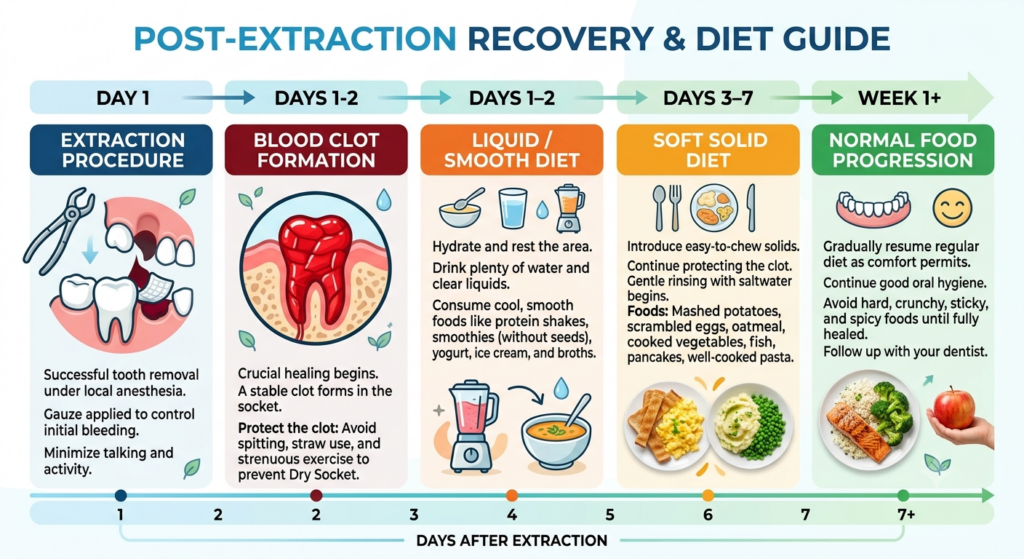
Wisdom tooth removal is a minor oral surgical procedure. Once the third molars are removed, your body immediately begins the healing process by forming a protective blood clot inside the extraction socket. This clot protects exposed bone tissue and nerves while new tissue develops underneath.
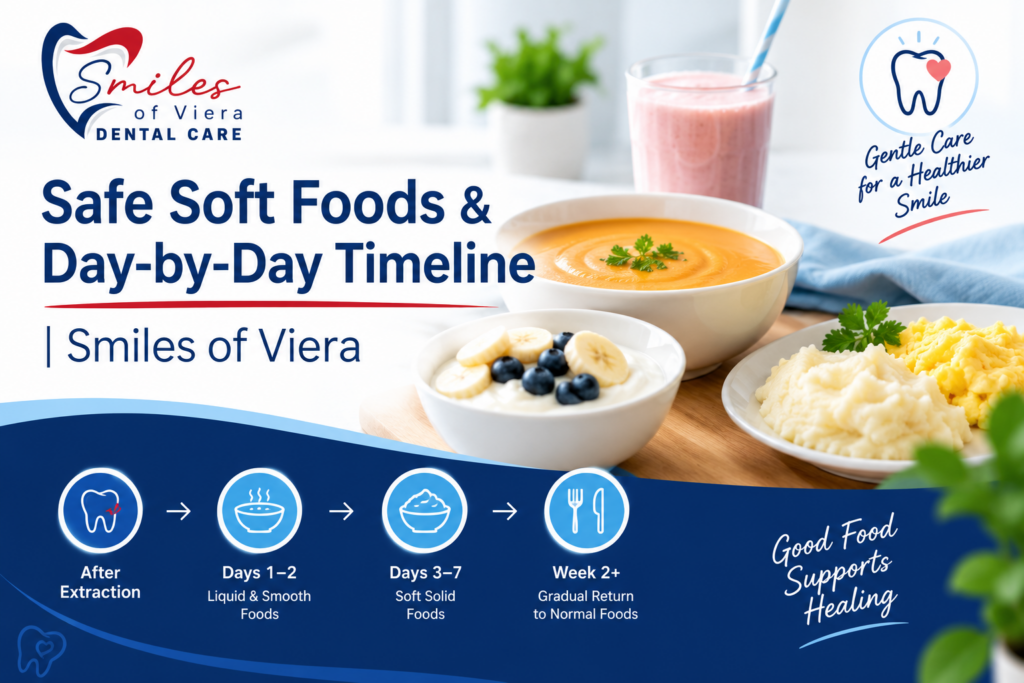
Day-by-Day Timeline: What to Eat After Wisdom Teeth Removal
Learn what you can eat after wisdom teeth removal during each stage of recovery, from smooth foods during the first 48 hours to soft solids later in the week.
25 Foods to Eat After Wisdom Teeth Removal
Days 1–2: The Smooth & Cool Phase
During the first 24 to 48 hours, your gums and jaw will feel tender, and mild swelling is normal. Your main focus should be hydration, protein intake, and staying strictly with smooth, non-chew liquids and cool or room-temperature purees.
- Greek Yogurt: Packed with protein and calcium to accelerate cell repair. Choose smooth, seedless varieties.
- Smooth Soups & Broths (Room Temp): Blended pumpkin, tomato, or bone broth provides vital nutrients without requiring jaw movement.
- Applesauce: Easy to swallow, naturally soothing, and rich in Vitamin C.
- Fruit Smoothies (Eaten with a Spoon): Blend bananas, spinach, and protein powder. Never use a straw!
- Ice Cream & Frozen Yogurt: Provides temporary cooling relief to swollen tissue (avoid flavors with nut chunks, chocolate chips, or seeds).
- Mashed Avocado: Full of healthy fats and vitamins that support healing.
- Pudding & Custard: Smooth textures that require zero chewing.
- Silken Tofu: Easily blended into broths or eaten soft for plant-based protein.
Critical Safety Note: Never drink through a straw after wisdom teeth removal. The suction created in your mouth can easily dislodge the blood clot, leading to dry socket, a painful condition that requires emergency dental treatment. Always drink directly from a cup or use a spoon.
Days 3–5: Soft Solids & Comfortable Chewing
As initial swelling subsides and jaw mobility improves, you can transition to soft foods that require minimal chewing effort.
- Mashed Potatoes or Sweet Potatoes: Hearty, soft, and comforting.
- Scrambled Eggs: Fluffy, protein-rich, and very gentle on healing gums.
- Refried Beans: Excellent source of plant protein and fiber.
- Oatmeal / Oatmeal Puree: Ensure it is thoroughly cooked, warm (not hot), and free of raw seeds or nuts.
- Cottage Cheese: High in protein and easy to swallow.
- Hummus: Pair with soft bread or eat with a spoon (avoid eating with crunchy chips).
- Macaroni and Cheese: Cooked extra soft so it can be chewed gently with your front teeth.
- Overcooked Pasta or Noodles: Soft noodles with mild sauces.
- Soft Canned Fish: Salmon or tuna mashed finely with light mayo.
Days 6–7 & Beyond: Expanding Your Diet
By the end of the first week, tissue closure is well underway. You can gradually reintroduce tender, easy-to-chew foods as long as you feel no sharp pain or pressure.
- Flaky Baked Fish: Cod, tilapia, or salmon that easily flakes apart.
- Ground Turkey or Beef: Softly cooked meat in a light savory sauce.
- Steamed Vegetables: Carrots, squash, and broccoli florets cooked until soft.
- Soft Bread or Pancakes: Soft interior bread without hard crusts or seeds.
- Shredded Chicken: Slow-cooked, tender chicken shreds.
- Soft Rice / Risotto: Cooked thoroughly to ensure no hard grains remain.
- Soft Tofu Scramble: Mildly seasoned for easy digestion.
- Well-Cooked Casseroles: Tender bakes that require minimal bite force.
Quick Reference: What You Can Eat vs. What to Avoid
| Recovery Phase | Recommended Foods to Eat | Foods & Habits to Avoid |
| Days 1–2 | Cool smooth broths, Greek yogurt, applesauce, ice cream, avocado purees | Straws, hot liquids, spicy foods, alcohol, seeds, small grains |
| Days 3–5 | Mashed potatoes, scrambled eggs, soft mac & cheese, cottage cheese | Chips, nuts, crusty bread, chewy meats, forceful spitting |
| Days 6–7+ | Flaky fish, steamed veggies, ground turkey, soft rice | Hard popcorn, sticky candy, sharp snacks, smoking/vaping |
Critical Foods and Habits to Avoid After Tooth Removal
To prevent infection, bleeding, or delayed wound closure, avoid the following items for at least 7 to 10 days post-surgery:
- Crunchy or Sharp Foods: Chips, crackers, nuts, and popcorn kernels can pierce tender gums or lodge deeply inside open extraction sockets.
- Seeds and Small Grains: Sesame seeds, poppy seeds, or quinoa easily become trapped in open surgical wounds, increasing infection risks.
- Spicy or Acidic Foods: Hot peppers, salsa, citrus fruits, and tomato sauce can cause sharp burning sensations on surgical wounds.
- Extremely Hot Beverages: Piping hot coffee, tea, or soup increases local blood flow and can dissolve or dislodge early blood clots.
- Alcohol & Carbonated Drinks: Alcohol interferes with prescribed antibiotics or pain medications, while carbonation can irritate healing gum tissue.
- Smoking and Vaping: Tobacco smoke and chemical vapors drastically impair blood flow and slow tissue regeneration.
Essential Oral Care Tips During Your Recovery
Eating the right soft foods is only half the recovery equation. Proper oral hygiene protects your mouth against bacterial buildup while the extraction sites close.
- Rinse Gently with Warm Salt Water: Starting 24 hours after surgery, gently swirl warm salt water (1/2 teaspoon of salt in 8 oz of warm water) after meals. Do not spit forcefully; let the water fall naturally out of your mouth into the sink.
- Brush Carefully: Continue brushing your remaining teeth carefully, but gently bypass the extraction sites until your dentist gives you the clear.
- Stay Well Hydrated: Drink plenty of water throughout the day to support cellular recovery and keep your mouth clean.
Expert Surgical Care & Wisdom Tooth Extractions in Rockledge, FL
If you are experiencing jaw pain, crowding, or stiffness near the back of your mouth, or if you have questions about an upcoming wisdom tooth extraction, our team at Smiles of Viera is here to help.
Dr. M. Ahmed provides compassionate, comprehensive oral surgical care and preventive treatments for patients in Rockledge, Viera, Melbourne, and nearby Brevard County communities. From your initial 3D digital imaging consultation through guided post-operative recovery, we ensure your treatment is safe, gentle, and stress-free.
Need guidance on wisdom teeth or post-operative care in Rockledge?
FAQs
During the first 24 hours, choose smooth, cool or room-temperature foods such as Greek yogurt, applesauce, pudding, smoothies eaten with a spoon, avocado puree, and smooth soups. As healing progresses, you can add mashed potatoes, scrambled eggs, soft pasta, cottage cheese, and other foods to eat after wisdom teeth removal that require little chewing.
Most patients can gradually return to a normal, solid diet after 7 to 10 days. However, you should avoid extremely hard, crunchy, or sharp foods (like popcorn and nuts) for up to 3 to 4 weeks to prevent trapping debris in the sockets.
Yes, you can eat macaroni and cheese starting around Day 3 or 4, provided the pasta is cooked extra soft and allowed to cool to a warm, non-hot temperature.
If food gets trapped, do not pick at it with toothpicks, fingers, or sharp objects. Gently rinse your mouth with warm salt water. If the debris does not rinse out or causes pain, contact your dentist for a professional irrigation.
You should avoid hot coffee for at least 48 to 72 hours, as heat increases blood flow and can dislodge blood clots. Iced coffee (without a straw) may be enjoyed after 24 hours in moderation.
Yes, scrambled eggs are one of the best foods to eat starting on Day 2 or 3 because they are soft, rich in protein, and require virtually no chewing effort.
Drinking through a straw creates negative pressure (suction) inside your mouth. This pressure can pull the protective blood clot out of the socket, exposing nerve endings and bone tissue, resulting in dry socket.
