- October 17, 2026
- By: Admin@@SMiles0fviEr@
- No Comments
Can I Drink Alcohol 24 Hours After Tooth Extraction? What You Need to Know
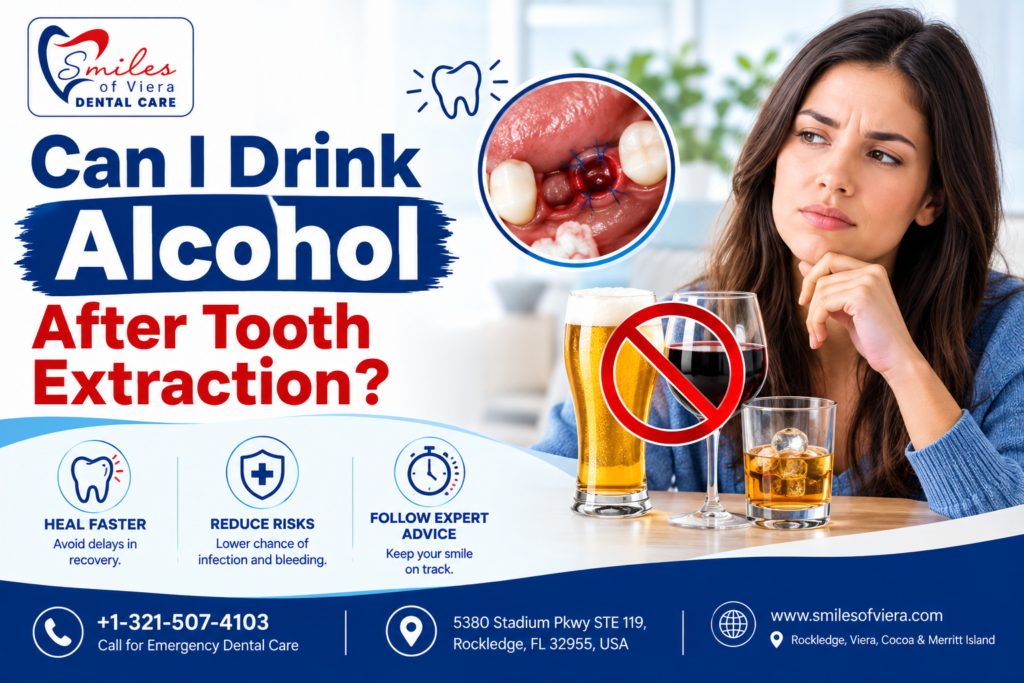
When recovering from a tooth extraction or wisdom teeth removal, patients often wonder about resuming normal routines, including social activities and enjoying a drink. If you are asking, “can I drink alcohol 24 hours after tooth extraction?” The short answer is no, you should not.
Drinking alcohol within the first 24 to 72 hours and ideally for at least 5 to 7 days—following dental surgery poses significant risks to your healing wound, blood clot stability, and overall oral health.
At Smiles of Viera in Rockledge, FL, our dental team prioritizes safe recoveries and optimal healing. This guide explains why alcohol must be avoided after oral surgery, what happens during the recovery timeline, and when it is genuinely safe to imbibe again.
Why Alcohol and Tooth Extraction Don’t Mix
Following a tooth extraction, your body initiates a delicate healing process centered on forming a protective blood clot in the empty tooth socket. This clot acts as a natural bandage, shielding underlying bone and nerve endings from bacteria, food debris, and air.
Consuming alcohol interferes with this healing process in several critical ways:
- Blood Thinning Effects: Alcohol acts as a mild anticoagulant (blood thinner). Drinking can prevent your blood from clotting properly or cause an existing clot to dissolve prematurely.
- Risk of Dry Socket (Alveolar Osteitis): If the blood clot is dislodged or dissolves before the socket heals, the bone and nerves are exposed. This condition, known as a dry socket, causes severe, radiating pain that often requires emergency dental intervention.
- Interaction with Medications: Most patients are prescribed pain medications, antibiotics, or sedatives following dental surgery. Mixing alcohol with these medications can lead to dangerous side effects, drowsiness, dizziness, liver strain, or decreased medication efficacy.
- Dehydration: Alcohol is a diuretic, which increases fluid loss. Proper hydration is vital for cellular regeneration and tissue repair after dental surgery; dehydration slows down recovery.
- Irritation: The high acidity and chemical composition of alcoholic beverages can chemically irritate the open surgical site, causing burning sensations, inflammation, and delayed healing.
The Post-Extraction Recovery Timeline: When Can You Drink Alcohol Safely?
Understanding the recovery milestones helps clarify when you can drink alcohol after wisdom tooth extraction or standard tooth removal.
Days 1 to 3: Strict Avoidance
During the first 24 to 72 hours, the blood clot is at its most vulnerable stage.
- Rule: Zero alcohol.
- Medications: You are likely taking prescribed or over-the-counter pain relievers that are unsafe to mix with alcohol.
Days 4 to 5: Approaching Safe Limits
By this stage, initial surface tissue healing has begun.
- Can I drink alcohol 5 days after tooth extraction? For many patients recovering from a straightforward extraction with zero complications and no remaining pain medication, a small, diluted drink may be permissible. However, consult your dentist first. If you had complex surgical extractions or wisdom teeth removal, waiting longer is strongly advised.
Days 7 to 10+: Full Recovery Window
- When can you drink alcohol after wisdom teeth removal? Wisdom teeth extractions involve larger surgical sites, bone manipulation, and longer healing times. Patients should wait at least 7 to 10 days before consuming alcohol, ensuring the extraction sites are well on their way to closure and all prescription medications are finished.
What Happens If You Drink Alcohol Too Soon?
Drinking alcohol does not automatically mean you will develop a complication. However, drinking during early recovery may not be worth the risk.
The extraction site is still vulnerable during the initial healing period. If the area becomes irritated or the blood clot is disrupted, healing may become more difficult.
One complication patients are often concerned about is dry socket.
What is a dry socket?
Dry socket, also called alveolar osteitis, can occur when the protective blood clot is lost or does not remain in place after an extraction.
It can cause significant pain and may require professional dental treatment.
Symptoms that warrant contacting your dentist can include:
- Increasing or severe pain after initially improving.
- Pain that spreads toward the ear, temple, or jaw.
- An unpleasant taste or odor from the extraction area.
- An extraction site that appears unusually empty.
- Persistent or worsening symptoms instead of gradual improvement.
Not every case of post-extraction discomfort is dry socket, so patients should not try to diagnose the condition themselves.
Can I Drink Alcohol 5 Days After Tooth Extraction?
You may be able to resume alcohol after five days in some circumstances, but five days is not a universal rule.
By this point, many patients are further into the healing process, but the extraction site may still be recovering.
Before drinking, consider:
- Is the extraction site healing normally?
- Are you still experiencing significant pain?
- Is there ongoing bleeding?
- Do you still have substantial swelling?
- Are you taking medication that should not be combined with alcohol?
- Did your dentist recommend avoiding alcohol for longer?
If you are unsure, contact your dental office before drinking.
What Should I Drink After Tooth Extraction?
During early recovery, water is generally a simple choice for staying hydrated.
Depending on your dentist’s instructions, you may also be advised to choose gentle, non-irritating beverages and avoid practices that could disturb the extraction site.
Helpful habits during early recovery include:
- Drink water regularly.
- Follow your dentist’s dietary instructions.
- Avoid very hot beverages immediately after the procedure if advised by your dentist.
- Avoid using straws if your dental professional has instructed you not to.
- Avoid alcohol during the recommended recovery period.
- Do not smoke or vape during the healing period.
- Follow your oral hygiene instructions carefully.
If you have questions about coffee, soda, sports drinks, or other beverages, ask your dental team for procedure-specific guidance.
Patient Journey: From Consultation to Recovery
Knowing what to expect during your dental procedure helps ensure a smooth, complication-free recovery:
- Symptoms & Concern: You experience persistent tooth pain, decay, crowding, or trauma, prompting a search for relief.
- Dental Examination: Visiting a trusted local dentist for a comprehensive dental exam and digital X-rays to evaluate tooth roots and bone structure.
- Diagnosis & Treatment Plan: The dentist determines that a tooth extraction or wisdom teeth removal is necessary to protect surrounding oral health.
- The Procedure: Performed under local anesthesia or sedation in a sterile, comfortable environment designed to minimize discomfort.
- Post-Operative Recovery: Following strict aftercare instructions including avoiding alcohol, smoking, using straws, and eating hard foods to safeguard the blood clot.
- Follow-Up: A post-op check-in with your dental team to ensure the surgical site is healing cleanly and comfortably.
If you are experiencing tooth pain or suspect you may need an extraction, schedule a consultation with our experienced professionals at Smiles of Viera in Rockledge, FL today.
Get Trusted Dental Care in Rockledge, FL
Navigating post-operative care doesn’t have to be confusing. Whether you are planning a routine extraction or recovering from complex dental surgery, expert guidance ensures your smile stays healthy and strong.
If you have questions about your recovery or need professional dental care in Rockledge, FL, we are here to help.
Schedule a Dental Consultation or contact our friendly team at Smiles of Viera today at (321) 507-4103.
FAQs
Can I drink alcohol 24 hours after a tooth extraction?
No. Drinking alcohol within the first 24 hours interferes with blood clot formation, increases bleeding risks, and dangerous interactions can occur if you are taking prescribed pain medications.
Can I drink alcohol 5 days after a tooth extraction?
While some patients healing without complications may have a small amount of alcohol by day 5, it is best to continue abstaining, especially if you are still taking pain medication or healing from a complex extraction.
When can you drink alcohol after wisdom teeth removal?
You should wait at least 7 to 10 days after wisdom teeth removal before consuming alcohol. Wisdom teeth extractions involve larger wounds and longer healing windows than standard extractions.
What happens if I drink alcohol too soon after dental surgery?
Drinking too early can dissolve or dislodge the blood clot, leading to dry socket—a painful condition where bone and nerves are exposed as well as increased bleeding, swelling, and delayed healing.
Can I drink beer or wine instead of hard liquor after an extraction?
No. All forms of alcohol—including beer, wine, and liquor—act as blood thinners, cause dehydration, and irritate the surgical wound. Furthermore, drinking from a bottle or using a straw for beer creates suction that can dislodge the blood clot.
Can I smoke or vape while avoiding alcohol after an extraction?
No. Smoking and vaping should be strictly avoided for at least 5 to 7 days after an extraction. The sucking motion and chemical toxins impair blood circulation and significantly increase the risk of dry socket.
What can I drink safely after a tooth extraction?
You should focus on cool or room-temperature water, clear broths, electrolyte drinks, and herbal teas. Always drink directly from a cup never use a straw.
When should I contact my dentist after an extraction?
Contact your dentist immediately if you experience severe worsening pain after 3 days, persistent heavy bleeding, foul taste or odor in the mouth, or fever, as these may indicate dry socket or infection.
